
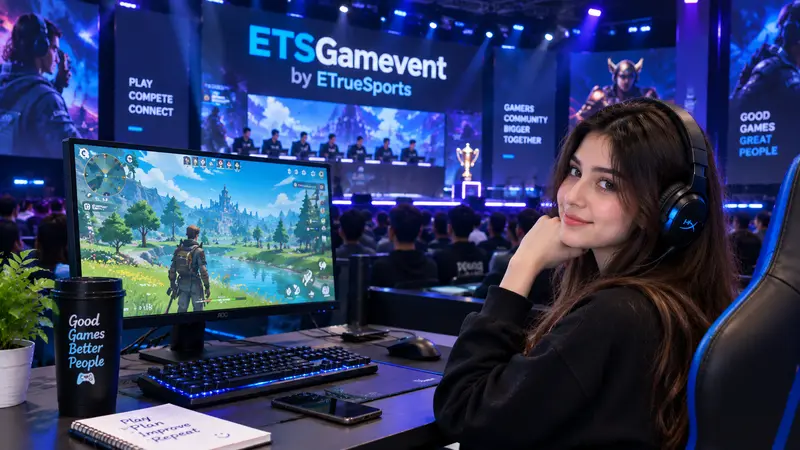
The world of competitive gaming continues to evolve as online tournaments, community competitions, live broadcasts, and organized esports events become increasingly connected. Players are no longer limited to informal matches; organized events can provide structured schedules, clear rules, technical support, competitive formats, and opportunities for communities to interact.
The hosted event etsgamevent by etruesports is presented as a competitive gaming event model designed to bring together players, organizers, spectators, sponsors, and technical teams. Available event information describes support for scheduling, registration, tournament management, referees, streaming, dedicated servers, and technical troubleshooting.
This guide explores the main aspects of ETSGameEvent, including its purpose, event structure, player experience, organization, technical operations, broadcasting, competitive standards, and preparation considerations.
What Is ETSGameEvent?
ETSGameEvent is described as an organized competitive gaming event associated with ETrueSports. Rather than focusing only on individual matches, the event model brings several parts of esports management together.
According to available ETrueSports information, organizers can work with tournament software, event staff, referees, streaming resources, and competitive standards. Players benefit from structured match schedules and technical systems intended to support consistent gameplay.
The concept can accommodate different competitive formats, including team-based and individual competitions. This makes the event structure suitable for communities and organizers looking to create a more organized gaming experience.
The broader purpose is to reduce the organizational complexity that often comes with running an esports competition. Instead of handling every element independently, organizers can plan the event while receiving support for important operational areas.
Key Features of ETSGameEvent
A successful esports event requires more than a game and a group of players. Several systems need to work together to create an enjoyable and competitive experience.
Important features associated with ETSGameEvent include:
- Tournament scheduling
- Player registration
- Competitive rules
- Referee management
- Technical support
- Server monitoring
- Streaming production
- Match administration
- Bracket management
- Audience engagement
- Backup procedures
These features help create a more predictable environment for players and spectators.
For organizers, having a structured system can make it easier to coordinate schedules, staff, equipment, and communication. For players, clearly defined rules and match times can make participation easier to understand.
Who Can Participate?
Competitive gaming events can attract several different groups. Players are naturally at the center, but an organized event also depends on organizers, referees, technical staff, broadcasters, volunteers, and spectators.
Community gaming groups can use organized events to bring players together around a shared interest. Esports clubs can also benefit from structured competitions that give members opportunities to practice teamwork and competitive decision-making.
Individual players may participate in competitions that match their preferred games or formats, while experienced teams can use tournaments as an opportunity to test their strategies against other competitors.
The available ETrueSports description specifically identifies community groups, esports clubs, small promoters, players, and sponsors among the groups that can benefit from the event structure.
Planning the Event Format
One of the first decisions in any esports event is the competition format.
The format determines how players or teams progress through the competition and how winners are determined. Depending on the game and audience, organizers might choose different structures for qualifying rounds, group stages, elimination rounds, or finals.
The organizer should consider:
Number of Participants
The expected number of players or teams affects scheduling, venue requirements, staffing, and tournament duration.
Team or Solo Competition
Some games are naturally suited to team-based competition, while others can work well with individual players.
Match Duration
Estimated match length is important because it affects the entire schedule. Longer matches require more time between rounds and may increase the total event duration.
Competitive Rules
Rules should be communicated before the event begins. Players should understand match requirements, eligibility, conduct expectations, scoring, and procedures for disputes.
Rules and Competitive Standards
Fair competition depends on clear and consistently enforced rules.
Organizers should communicate the rules before registration or at least before the competition starts. Players need to know how matches are structured and what behavior is expected.
Referees can help enforce those standards during matches. The ETrueSports event description states that referees and tournament management are part of the operational structure.
Clear rules can also reduce disagreements. When a situation occurs during a match, officials can refer to established procedures instead of making completely new decisions during the competition.
Important rules can cover:
- Match procedures
- Player eligibility
- Team registration
- Scheduling
- Match reporting
- Disputes
- Technical interruptions
- Competitive conduct
- Equipment requirements
- A well-designed rulebook should be easy for players to understand.
Registration and Scheduling
Registration is another important part of event planning. Players need to know when registration opens, what information is required, and when registration closes.
Organizers should collect only the information necessary for event administration and communicate important deadlines clearly.
Once registration is complete, tournament staff can organize brackets and schedules.
A strong schedule should include enough flexibility to account for unexpected delays. Building a small amount of contingency time into the schedule can prevent one delayed match from affecting every subsequent round.
The ETrueSports description emphasizes schedule planning and registration as important parts of the hosted competition process.
Technical Infrastructure
Technology is one of the most important components of modern esports.
A competitive event can be affected by connection quality, server performance, equipment problems, software errors, or unexpected network interruptions. Technical preparation therefore needs to happen before the first match begins.
The event information describes the use of dedicated game servers, latency monitoring, backup equipment, and a technical help desk.
Technical teams can monitor:
- Server performance
- Player connections
- Network latency
- Match systems
- Broadcast feeds
- Player equipment
- Backup systems
The goal is not to eliminate every possible technical issue but to identify problems quickly and have procedures available for handling them.
Streaming and Broadcasting
Modern esports events are not limited to people physically present at a competition. Streaming allows spectators to follow matches from different locations.
A professional broadcast can include live gameplay, commentators, graphics, schedules, match information, and other supporting elements.
The ETrueSports event description mentions streaming templates, overlay graphics, and broadcast production support.
A broadcast team may include:
- A broadcast producer
- Commentators
- Technical operators
- Graphics operators
- Stream moderators
Good production helps spectators understand what is happening without distracting from the actual competition.
The Role of Referees and Tournament Officials
Tournament officials provide structure during competitive matches.
Referees may monitor gameplay, respond to disputes, verify match conditions, and enforce established rules. A lead tournament manager can coordinate the broader event and communicate with different staff members.
This division of responsibilities is particularly useful when an event includes many simultaneous matches.
The event model described by ETrueSports includes tournament managers, referees, casters, volunteers, technical staff, and broadcast producers.
Each role contributes to a different part of the overall event.
Player Experience
From a player’s perspective, organization can make a significant difference.
Players generally want to know where they need to be, when their match begins, what rules apply, and what happens if a technical issue occurs.
The hosted event etsgamevent by etruesports is described as providing structured match timings, reliable server support, and competitive safeguards designed to create a consistent experience.
Players can prepare more effectively when schedules and rules are communicated clearly.
Preparation may include checking equipment, reviewing rules, confirming registration details, testing connectivity, and arriving or connecting before the assigned match time.
Sponsorship Opportunities
Sponsors are another important part of esports events.
Gaming competitions can provide brands with opportunities to connect with players and audiences through approved event placements, broadcasts, and promotional materials.
The available ETrueSports description notes branded placements and audience metrics as potential benefits for sponsors.
For sponsors, useful event metrics can include:
- Audience size
- Stream views
- Engagement
- Match attendance
- Social interaction
- Brand visibility
A successful sponsorship should fit naturally into the event without distracting players or spectators.
Technical Troubleshooting During Matches
Even carefully prepared events can experience technical problems.
A connection issue, equipment failure, or server interruption can potentially affect a match. This is why event teams need defined escalation procedures.
The ETrueSports event description mentions a help desk for logging incidents and routing problems to technical personnel. It also describes backup equipment and failover procedures.
A useful troubleshooting process should establish:
- Who receives the initial report.
- Who investigates the problem.
- Whether the match should pause.
- What evidence should be collected.
- When a match can continue.
- What happens if the issue cannot be resolved.
Having these decisions established beforehand makes event management more consistent.
Online, Local, and Hybrid Competition
Competitive gaming events can use different delivery models.
Online Events
Online competitions allow players from different locations to participate without traveling to a physical venue. They depend heavily on stable connections, server performance, and effective communication.
Local Events
Local competitions bring players together at a physical location. This can create stronger face-to-face community interaction and a more traditional tournament atmosphere.
Hybrid Events
Hybrid formats combine online qualification or participation with a physical final. This can give organizers greater flexibility while still creating a live competitive experience.
The event structure associated with ETrueSports has been described as combining scheduled competitive gaming with organized event management and technical infrastructure.
How to Prepare for ETSGameEvent
Players can improve their experience by preparing before competition day.
Review the Rules
Read the event rules carefully and understand the match format.
Check Your Equipment
Make sure your gaming system, controller, keyboard, mouse, headset, or other required equipment is working properly.
Test Your Connection
For online competition, test your connection before the event instead of waiting until the match begins.
Check the Schedule
Know your expected match time and allow enough preparation time before the competition.
Stay Organized
Keep registration details and important event communications accessible.
These basic steps can reduce avoidable problems and help players focus on competition.
What Makes a Successful Gaming Event?
A successful esports event depends on several connected elements rather than one feature.
| Area | Importance |
|---|---|
| Rules | Establish clear competitive expectations |
| Scheduling | Keeps matches organized and predictable |
| Servers | Support reliable gameplay |
| Referees | Help enforce competitive standards |
| Broadcasting | Connects matches with spectators |
| Technical Support | Responds to equipment and connection problems |
| Registration | Organizes players and teams |
| Staffing | Gives each operational area clear responsibility |
| Communication | Keeps players and audiences informed |
| Backup Planning | Helps manage unexpected problems |
When these areas work together, an event can provide a smoother experience for everyone involved.
Community Engagement
Esports is not only about winning matches. Community interaction is also an important part of the gaming ecosystem.
Events can give players opportunities to meet other gamers, follow competitive teams, watch skilled players, and participate in discussions around their favorite games.
Spectators also contribute to the atmosphere of an event. Live broadcasts, commentary, chat, social content, and match highlights can extend an event beyond the competition itself.
The broader ETSGameEvent concept has been described as connecting players, organizers, and spectators through scheduled competitions and community-focused activities.
Future of Organized Gaming Events
The future of esports events will likely involve stronger technical infrastructure, better broadcasting, automated scheduling, improved data systems, and more accessible competition.
Online platforms can reduce geographic barriers, while local events can provide stronger community experiences. Hybrid formats may combine the strengths of both.
Better data systems can also help organizers understand participation and audience behavior. At the same time, competitive integrity, fair rules, reliable technology, and player experience will remain important.
The hosted event etsgamevent by etruesports represents this broader movement toward organized competitive gaming supported by dedicated tournament, technical, and broadcast operations.
Frequently Asked Questions
What is ETSGameEvent?
ETSGameEvent is described as an organized gaming event associated with ETrueSports, combining competitive matches with tournament management, technical operations, and broadcasting support.
Who can participate?
Depending on the specific event format, participation can involve individual players, teams, gaming communities, and esports clubs.
Are referees included?
Available ETrueSports information describes referees and tournament officials as part of the event staffing structure.
Does ETSGameEvent support streaming?
The event information describes streaming templates, broadcast production, and graphics support for competitive events.
What happens if there is a technical problem?
Technical teams can investigate connection, server, or equipment problems. The described event model includes monitoring, backup equipment, incident logging, and troubleshooting procedures.
Conclusion
The growth of competitive gaming has created a need for events that combine strong organization with reliable technology and an enjoyable player experience. Successful competitions require much more than simply putting players into a match. Scheduling, registration, rules, referees, servers, technical support, broadcasting, communication, and contingency planning all contribute to the final experience.
The hosted event etsgamevent by etruesports provides an example of this organized approach, with available information describing tournament management, dedicated servers, technical monitoring, streaming support, referees, and event staffing.
For players, preparation means understanding the rules, checking equipment, following schedules, and maintaining clear communication. For organizers, success depends on planning every stage of the competition and preparing for unexpected technical or scheduling issues.
As esports continues to develop, professionally managed events can help create more consistent competitive experiences while connecting players, spectators, communities, and sponsors. With careful planning and dependable infrastructure, ETSGameEvent-style competitions can contribute to the continuing growth of organized gaming. Visit Etruegames for more details.