
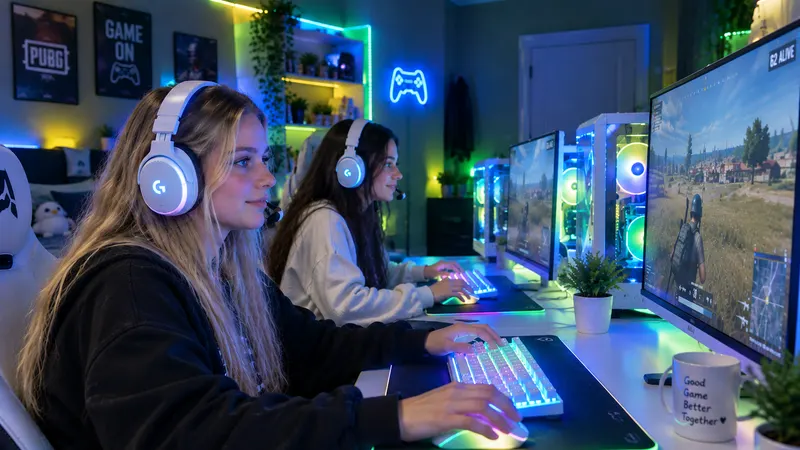
Gaming has changed from a simple form of entertainment into a highly organized digital activity where players can practice, compete, follow tournaments, and connect with gaming communities. For players interested in structured competition, game etruesports is a useful topic because it brings together competitive matches, tournament formats, player development, and modern gaming technology.
Current eTrueSports material describes its gaming environment as supporting competitive events across PC, console, and mobile titles, with different formats designed for players at various skill levels.
This guide explains what the platform concept means, how competitive matches work, what players should know before joining an event, and how beginners can develop their skills.
Table of Contents
ToggleWhat Is Game ETrueSports?
Game eTrueSports refers to organized competitive gaming where players participate in structured matches, leagues, and tournaments. Instead of simply opening a game and playing casually, competitive gaming introduces rules, schedules, brackets, rankings, and organized match formats.
According to current ETrueSports information, its competitive gaming content covers different platforms and supports both individual and team-based competition. Players can encounter formats such as solo matches, team events, and organized tournament brackets.
The basic idea is straightforward: players select an event, understand its requirements, register when eligible, and then compete according to the published rules.
This approach can make gaming more organized while giving players a clear way to measure their progress.
How Game ETrueSports Works
The process generally starts with finding a suitable competitive event. Players should review the game, platform, tournament format, schedule, rules, and participation requirements before registering.
Once an event begins, players are placed into the appropriate match or bracket. Depending on the competition, the format may include elimination rounds, round-robin stages, Swiss-style systems, or other tournament structures.
A typical competitive gaming process can include:
- Creating or accessing a gaming account.
- Selecting a supported game or competition.
- Checking the event rules.
- Confirming the required platform or game account.
- Registering for the event.
- Checking the match schedule.
- Joining the assigned match.
- Following the rules during gameplay.
- Reporting or confirming the match result.
This structure helps reduce confusion because players know what they need to do before, during, and after a competition.
Types of Games and Competition
One important part of game etruesports is the variety of competitive game categories that can be included in organized gaming.
Competitive gaming commonly covers genres such as:
| Game Category | Competitive Focus |
|---|---|
| Shooters | Accuracy, teamwork, positioning |
| MOBAs | Strategy, teamwork, map control |
| Fighting Games | Timing, reactions, combinations |
| Racing Games | Driving skill, consistency, strategy |
| Strategy Games | Planning, resource management, decision-making |
| Team Games | Communication and coordinated play |
Different genres require different skills. A player who performs well in a strategy game may need a completely different approach when learning a fighting game or racing title.
That variety is one reason competitive gaming attracts people with different interests and play styles.
Tournament Formats Explained
Tournament format can have a major effect on the competitive experience. ETrueSports information describes formats including single elimination, double elimination, round robin, and Swiss-style competition.
Single Elimination
In a single-elimination tournament, losing a match normally means leaving the competition. The format is easy to understand and can move quickly.
Double Elimination
Double elimination gives players another opportunity after an initial loss. Participants generally have to lose twice before being eliminated.
Round Robin
In a round-robin event, participants play multiple opponents. Results are then used to determine standings.
Swiss Format
Swiss-style tournaments allow players to compete across several rounds without necessarily being eliminated after one loss. Pairings can be organized according to previous results.
Each format creates a different competitive experience, so players should always read the event information before joining.
Skills Needed for Competitive Gaming
Being successful in competitive gaming is not only about fast reactions. Players also need game knowledge, communication, concentration, adaptability, and consistent practice.
Some important skills include:
- Game knowledge: Understanding maps, characters, mechanics, objectives, and rules.
- Decision-making: Choosing the right action under pressure.
- Communication: Sharing useful information with teammates.
- Adaptability: Changing tactics when an opponent uses a different strategy.
- Consistency: Maintaining performance across multiple matches.
- Replay analysis: Reviewing previous games to identify mistakes.
A player should focus on improving one area at a time instead of trying to change everything immediately.
Preparing for an ETrueSports Match
Good preparation can make competitive gaming more comfortable and organized. Before a match, players should make sure their game is updated and their hardware is functioning properly.
A stable internet connection is also important for online competition. Unnecessary applications should be closed if they affect system performance or network stability.
Players should also check:
- Match time and timezone
- Tournament rules
- Game version
- Required platform
- Team information
- Communication settings
- Controller or keyboard settings
- Internet connection
- Match reporting requirements
Taking a few minutes to prepare can prevent avoidable technical problems.
Hardware and Gaming Setup
A competitive setup does not necessarily need to be extremely expensive. What matters most is reliability and consistency.
A practical gaming setup can include a capable computer or console, a responsive display, comfortable input devices, stable internet, and suitable audio equipment.
For PC players, maintaining reasonable performance is particularly useful. Stable frame rates and consistent controls can make it easier to concentrate on gameplay.
The goal should be to create a setup that works reliably rather than simply buying the most expensive equipment available.
Fair Play and Competitive Rules
Fair play is an important part of organized gaming. Tournament organizers normally publish rules that explain acceptable behavior, match settings, communication requirements, and procedures for handling disputes.
ETrueSports material describes the use of rule sets, match reporting, referee oversight, and replay-related processes to support competitive integrity.
Players should read the rules before competing rather than assuming that every tournament follows the same requirements.
Respectful communication is also important. Competitive matches can become intense, but players should avoid harassment, cheating, or behavior that disrupts other participants.
Improving Your Performance
Players who want to improve should treat every match as an opportunity to learn.
One useful approach is to review gameplay after each session. Instead of only looking at wins and losses, ask practical questions:
- Why did I lose an important round?
- Did I make the same mistake repeatedly?
- Was my positioning effective?
- Did I communicate clearly?
- Which opponent strategy caused problems?
- What can I practice before the next match?
This turns ordinary gameplay into structured practice.
Players can also divide training into smaller goals. For example, one session might focus on mechanics while another focuses on strategy or communication.
Community and Spectator Experience
Competitive gaming is not limited to players. Spectators, streamers, organizers, commentators, and gaming communities also contribute to the experience.
Modern competitive events can include live broadcasts, leaderboards, match statistics, schedule notifications, and community discussions. ETrueSports event material also describes features such as streaming support, real-time scoreboards, notifications, and organized tournament management.
This creates a wider ecosystem around games. Someone who does not compete directly can still follow tournaments, watch matches, discuss strategies, or create gaming content.
Why Players Follow Game ETrueSports Content
The value of game etruesports content is not limited to tournament participation. Gaming audiences also want information that helps them understand updates, competition, technology, and changing trends.
A useful gaming resource can help readers discover:
- New gaming developments
- Competitive events
- Tournament formats
- Game strategies
- Gaming technology
- Updates and changes
- Community activities
- Esports-related information
This makes competitive gaming content useful for both experienced players and people who are just discovering organized gaming.
Common Mistakes Beginners Should Avoid
New competitive players often make simple mistakes that can be avoided with better preparation.
One common mistake is joining an event without reading its rules. Another is ignoring the schedule until the last minute.
Players should also avoid changing their entire setup immediately before an important match. Familiar controls are generally easier to use than equipment that has not been tested.
Other mistakes include:
- Skipping practice
- Ignoring communication
- Blaming teammates for every loss
- Failing to review mistakes
- Neglecting software updates
- Forgetting match times
- Playing without understanding the tournament format
Small improvements in preparation can make the overall experience much smoother.
Future of Competitive Gaming
The competitive gaming environment continues to develop alongside better connectivity, streaming technology, analytics, and tournament management systems.
Platforms and organizers are increasingly focused on making events easier to join while providing clearer schedules, automated match assignments, player statistics, and community features. Current ETrueSports event information highlights automated scheduling, low-latency infrastructure, real-time scoreboards, and organizer tools as parts of its event approach.
For players, this means competitive gaming can become more structured and accessible across different devices and experience levels.
Frequently Asked Questions
What is Game ETrueSports?
Game ETrueSports refers to organized competitive gaming involving structured matches, tournaments, rules, and player participation across supported games and platforms.
Can beginners participate?
Yes. Competitive gaming can include events for different experience levels. Beginners should start with formats that match their current skill and carefully read the requirements.
What games are supported?
Available games and events can change. Current ETrueSports material describes competition across PC, console, and mobile titles and categories such as shooters, MOBAs, fighting, racing, and strategy.
How can I improve?
Practice consistently, study game mechanics, review your matches, learn from stronger players, and work on specific weaknesses instead of practicing without a goal.
Is a powerful gaming PC necessary?
Not always. Requirements depend on the specific game. A reliable device that can run the game smoothly, combined with stable internet and responsive controls, is more important than simply having expensive hardware.
Conclusion
Game ETrueSports represents the organized side of modern gaming, where players can move beyond casual matches and explore tournaments, structured competition, teamwork, strategy, and community involvement. The competitive environment can support different game genres, platforms, tournament formats, and player experience levels.
For beginners, the best starting point is understanding the rules, selecting suitable competitions, preparing the gaming setup, and practicing consistently. Experienced players can use match reviews, teamwork, tournament experience, and performance tracking to continue developing.
As competitive gaming continues to evolve, organized platforms and communities will remain an important part of how players discover games, compete with others, and follow the wider esports world. Visit Etruegames for more details.